The Music of Regeneration: Farms, Communities, Organizations and Leadership
-
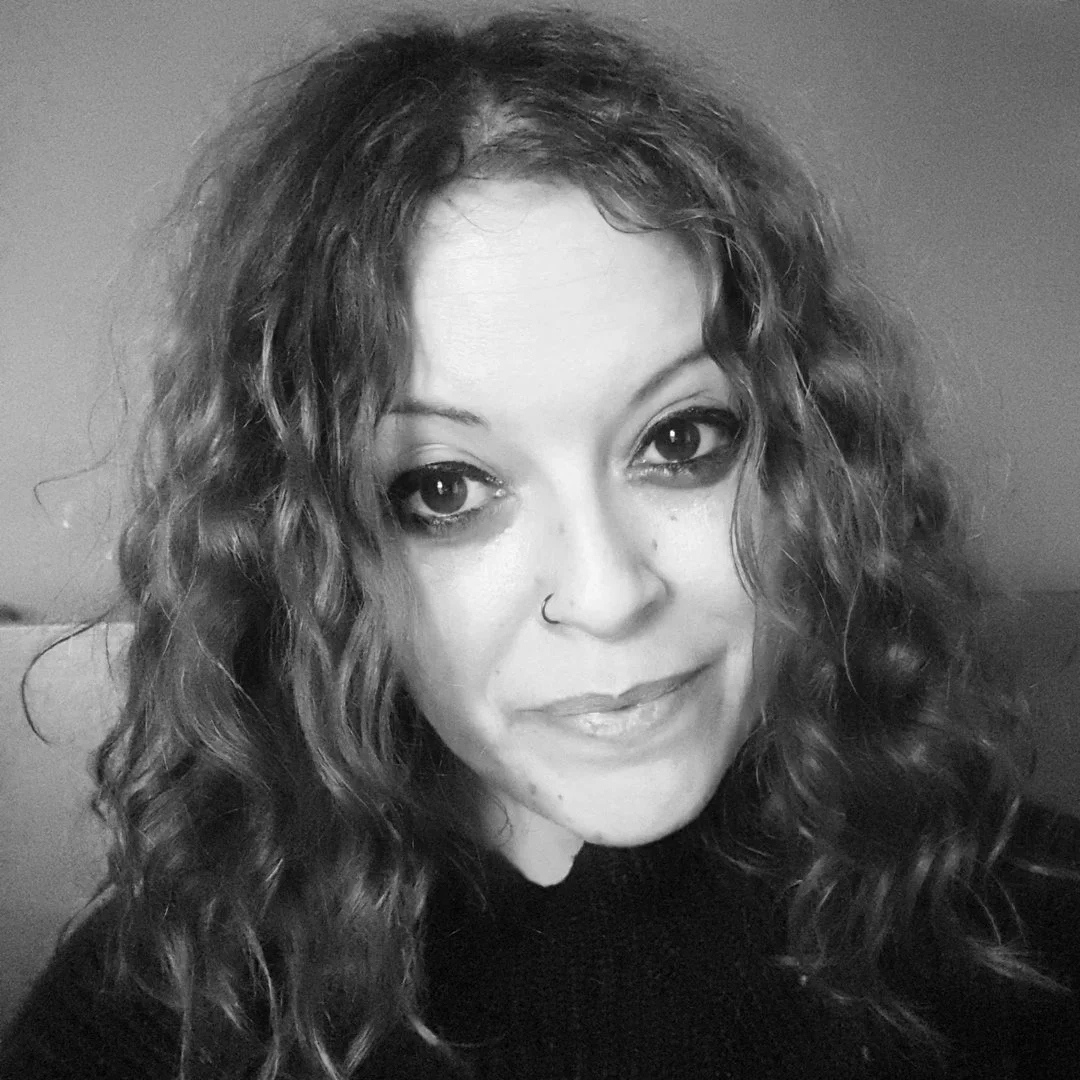
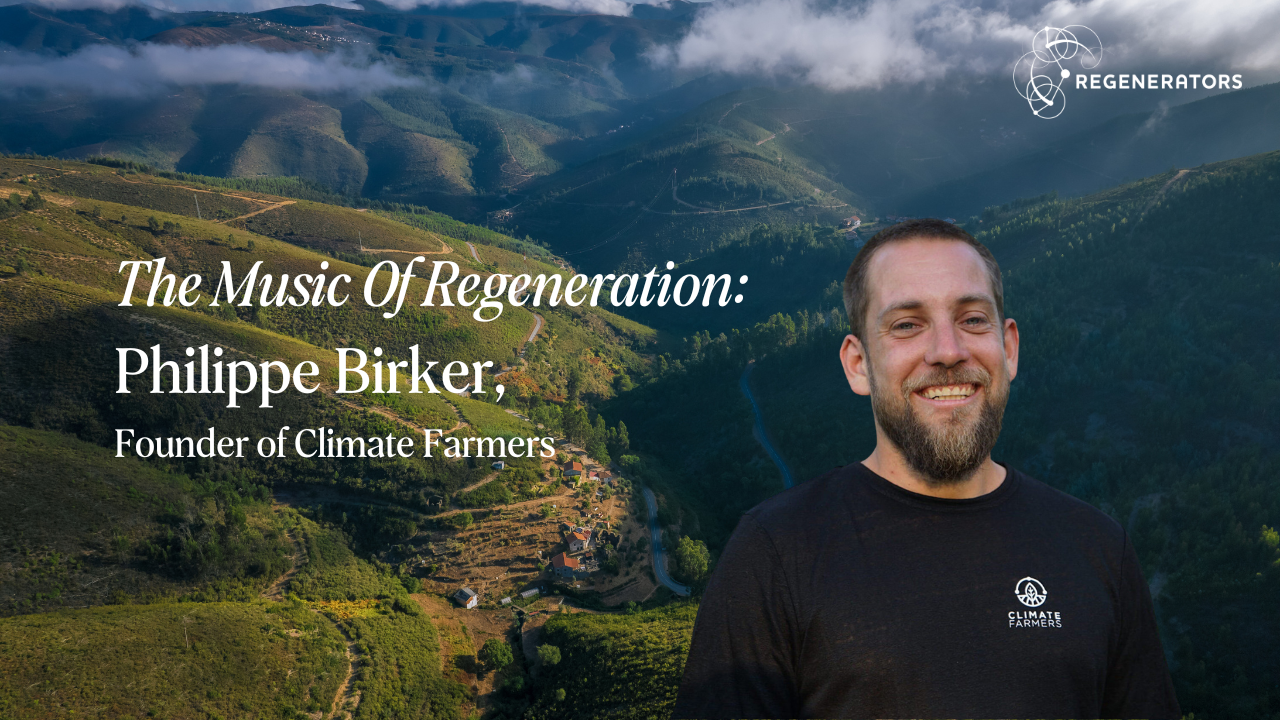
Philippe Birker is a co-founder of Climate Farmers, an organization dedicated to building Europe’s regenerative agriculture future, centering farmers through community, research, training and education. He is also co-founder of the Love Foundation music cultural community, and Hug records social music label.
Philippe is a 2022 alumnus of Regenerators Academy.
We are each born with music within us. Rhythm. We are accompanied our whole lives by the drums of heartbeats. Including Earth’s own.
The songs of the seasons. Of rivers. Of land. Sun and night. All invite us to dance with them.
Those who work the land – farmers – know this music better than most. Hands in soil, face to air, they can feel the symphonies of the changing year.
A village has its own rhythm, too. An organization. Leadership.
Philipe Birker is an embodiment of fused genres. The countryside and the city. The farm and the rave. The entrepreneur and the community nurturer.
This is the music of regenerating our land, our organizations, villages, ourselves. How to notice if a soundtrack falters. And how to once again pick up the beat when it does.
The discordance of degenerative farming and organizations
Philippe Birker witnessed the toil of conventional farming as a child.
It’s why he’s so determined to “make farming sexy again,” as he says.
The stories he carried with him of farming into adulthood were rooted in experiencing his godmother's family – sixth-generation farmers – working the land of rural western Germany, within a village of 5,000 people.
“How we treat the land can be a mirror to how we treat ourselves, our organizations, each other. ”
Long working days, high financial pressure, no societal appreciation. Not one person in his high school looked to the farming work of their families and neighbours and dreamed of taking up the generational mantle.
“I would love to be a farmer, but I first need to create a world where that’s possible with a certain quality of life. Because right now, I would not recommend anyone to become a farmer. The reality of being a farmer is really horrible. They are at the beating end of our food system, and that’s a problem, because in my view they do the most important work...
We need to create a world where people are excited about becoming farmers, and where farmers have a life quality, and are a respected part of society. Because from what I’ve seen while growing up, this wasn’t the case.”
How we treat the land can be a mirror to how we treat ourselves, our organizations, each other. Disconnected from natural rhythms, extractive, exploitive. A hard focus on quantity of outputs, and whatever it takes, rather than consideration of the ‘how’ and quality of what it is we’re stewarding.
Degenerative land practices. Degenerative organizational practices. Degenerative leadership practices.
For Philippe, the connection between all is clear:
“I found the same thing as with agriculture when we started with Climate Farmers. It was very clear for me that what I had learned in my jobs and what I had learned at university was not how I believe I want to run a company. And I've seen [with this] exactly as with agriculture: all the bad. And I was asking myself, ‘Where's the good?’”
We often need to see, hear, feel what’s possible. To have our inspirations, our influences to feed our own creations.
Philippe’s journey is one that takes in the siren of the city and its promises, as it has for so many of his rural peers across Europe, indeed the world. Just as has been happening for the last 50, 60 years, as Philippe reminds us, as the countryside has become deserted and farming as a calling has become harder and harder.
And his journey is one that has ultimately brought him back to the land, carrying with him the song of regeneration.
As soon as he was able, at 18, Philippe left a land carried in the hard rhythm of farms for one driven by the beats of urban life.
After a few years in Syndey, he moved to study entrepreneurship and business at Maastricht University, and then moved again for a job in Amsterdam. It was during this period that some of the seeds of Climate Farmers were unconsciously sown, both within an electronic music community Philippe co-founded, called Love Foundation – its logo inked into his skin – and through his experiences working in organizations where something didn’t feel right.
Love Foundation first organized raves amongst the caves of Maastricht before moving to a rented warehouse in Amsterdam, bringing people and artists together while also supporting water projects in South Africa. The community quickly spread, forming a musical web across 36 cities around the globe.
And then, gentrification arrived – the warehouse they rented was torn down by the municipality of Amsterdam, to make way for a park within a newly gentrified neighbourhood.
In the aftermath, the volume of the countryside was gradually turned up for Philippe.
Land beckoned.
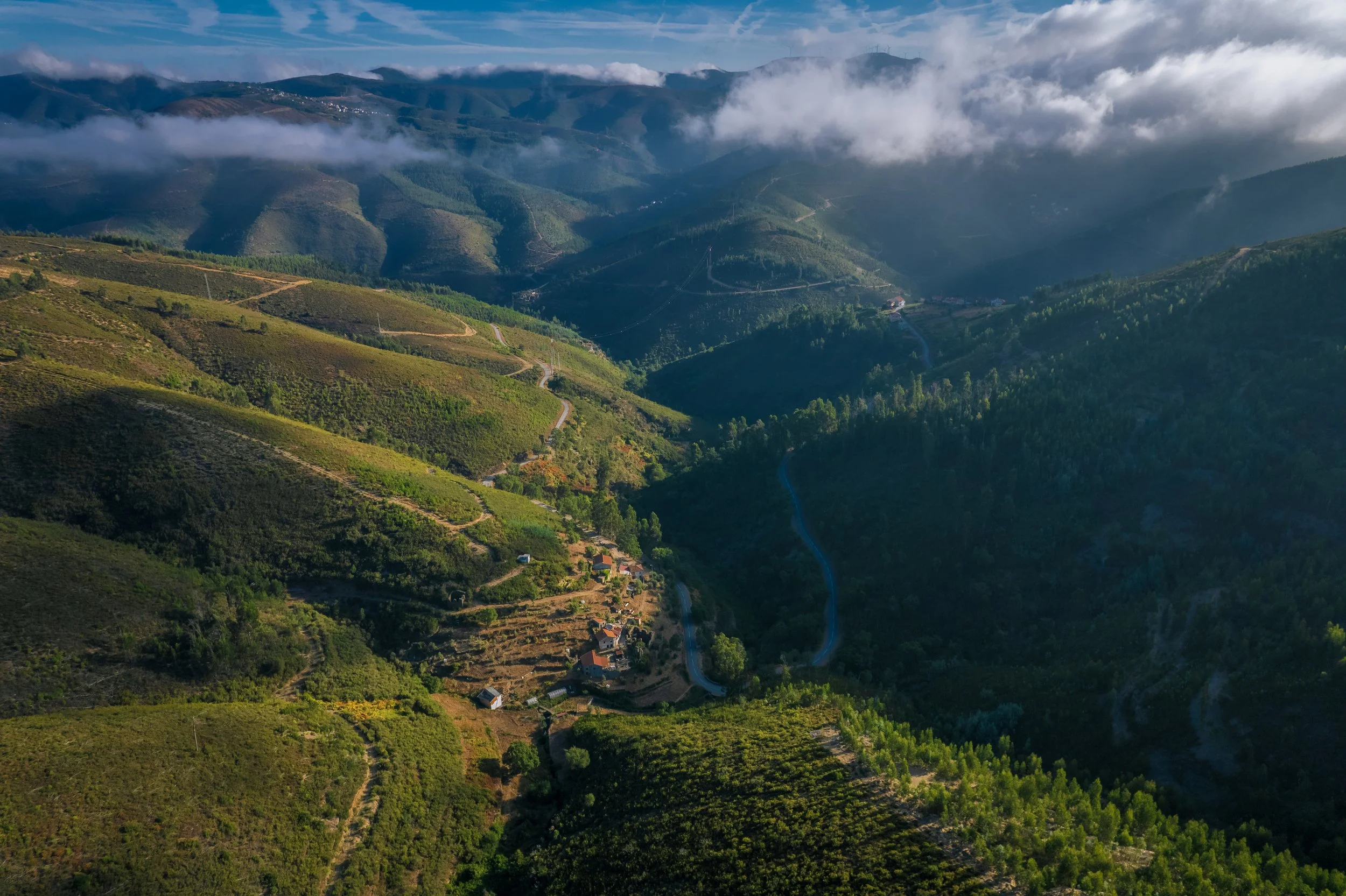
Foz de Cova, Portugal
A village. A pilgrimage
There is a village in Portugal, held within mountains, and living to the sound of the river it was created around. For thousands of years, this had been home to humans as well as the more-than-human. Here, there are old Roman terraces, an old Roman bridge. Until the late 1950s, humans still lived within its 9 houses, amongst its 14 goat sheds, on 7.5 acres of land. Until the humans lived there no longer.
Is a village still a village once the humans leave, and its occupants are the more-than-human?
For Philippe and his Love Foundation co-founders, the land sung a song of home.
“It’s a beautiful nature spot, but it needs people, it needs love, it needs attention, someone to care for it. That was also the calling that I really felt while being there and walking around the village. It became clear that there was a calling for me here: How can I nurture this land? How can I help this land to thrive again? What do I do here? And that was essentially the starting point of the pilgrimage.”
The pilgrimage.
A pilgrimage is a journey, often to a holy place. The pilgrim may experience personal, spiritual transformation before returning.
For Philippe, the holy place was the 60 regenerative farms he found existing across Europe.
The questions about how to help the village land thrive again had led him down a path of inquiry around permaculture, regenerative agriculture. His own stories and beliefs about farming shifted during the pilgrimage. He began to see that not only was a different farming life possible; it was already happening.
“It was a very different reality of farming that I was suddenly confronted with. Every regenerative farmer that I've met so far deeply, deeply loves what they're doing. And they feel and they know that it's right what they're doing. They get the feedback from the land. They get the river talking to them. They get the soil talking to them. They get the plants talking to them. They can see it thrive. But they're stuck in a system where other people call them crazy for what they're doing…
And so there was this realization for me: there is a way of doing farming that is actually in line with nature. People want to do it. But there’s no-one to support them.”
And so, the beat kicks in once again. The reverberations from Love Foundation’s work, connecting artists and musicians, are felt.
“Many of these farmers thought they were the only ones. Many of these farmers thought, "There's no one else doing it." I realized, these farmers, they all don't know each other. They're all doing amazing work.
And the very first simple thing that we did, the most magical thing we did was to connect all of these farmers with each other on WhatsApp, to say, ‘You are all doing incredible stuff. You're all over the Europe. You should know you exist. You're not alone.’”
From that first step, an unfolding movement. The birth of Climate Farmers.
Regenerating land, people, leadership
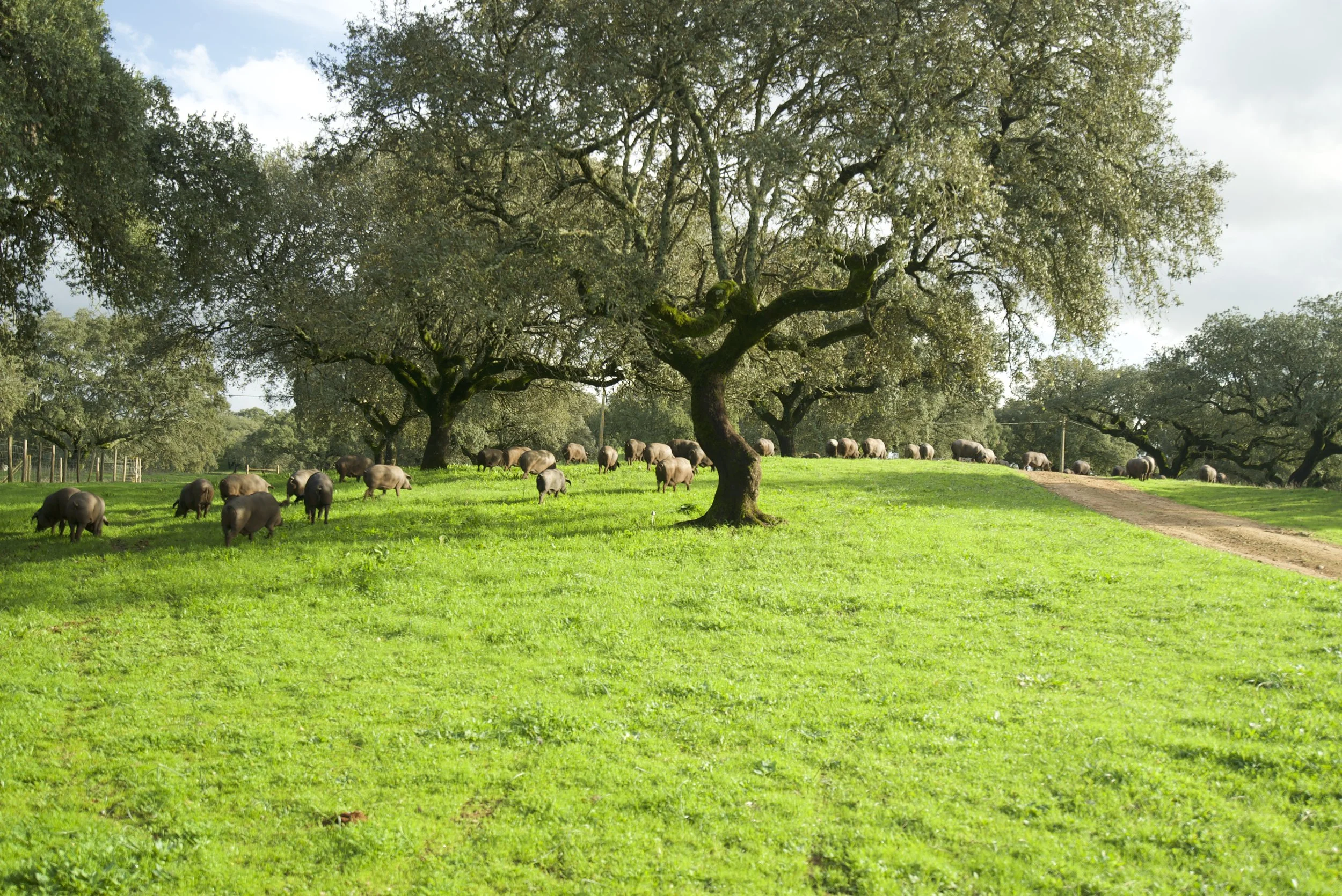
Regenerative practice is woven through all that Climate Farmers does. It’s there in the relationship between farmer and farm. There in the relationship between organization and farmers. And there within Climate Farmers itself, and its people.
“I do whatever I can to build a thriving community of action around farmers,” Philippe reflects.
For the farmers themselves: supporting peer-to-peer learning. Advocating for regenerative agriculture practices with politicians, corporates. Dreaming of and feeling into the weaving of regenerative agriculture into the 512 agriculture degrees across Europe that exist. Supporting fair pay for regenerative farmers through a flawed but necessary carbon credit market.
But what of Climate Farmers itself? How to lead regeneratively, particularly within a start-up?
“[After wondering ‘where is the good?’] I found the Regenerative Leadership book by Laura Giles. And I read the book and loved every word of it. I was like, ‘Finally, something that really resonates with how I believe we should run organizations.’”
Philippe became a part of the first cohort of the Regenerators Journey, in 2022. And it directly impact how he – and the colleagues who have gone on the Journey afterwards – think about their organization.
“I went on the journey and I loved it. It really, really shaped a lot of my thinking. I had the pleasure of meeting people who are still friends, also meeting with Daniel Christian Wahl, Bayo Akomolafe. I went to Selgars, which was beautiful as a gathering. It definitely feels like one of the communities I feel very connected with, because there are lots of people with a very similar mindset to me. A similar understanding of the fact that we need to rethink how we’re running our societies, our companies, our farms and our schools.”
For Climate Farmers, it has meant a continuous sensing into size, practice, rhythm. People are supported to work aligned with their own circadian rhythms, rather than forcing them into a ‘once-size-fits-all’ industrial workday. The weeks and months have their own music, bringing people together for a shared vision session, an attention session, a week closing. Wintering is folded in as a time of reflecting, sending what wishes to be released, what wishes to be sown and kept for the spring season, when activity picks up again.
As the organization grew, a key learning also came through for the leadership team. While start-ups are commonly encouraged to scale, and quickly, the team learned this wasn’t healthy for them. Wasn’t regenerative. It led to a realization that what works best for them is an interconnected ecosystem of smaller organizations, each with its own focus, its own leadership.
The organization and its leadership ensure they’re not just supportive regenerative agriculture, but living by those principles themselves in all they do.
Philippe no longer lives in the Portuguese village that feels like home. His own growing family has pulled him to a different place, more suited for children, despite his dreams of one day having families living there again.
But the village of the mountains and the river still calls.
“I don’t call myself a farmer because I don’t spend much time farming. But I have my own little agroforestry project in the mountains, where we planted 700 fruit and nut trees. And I’m going to do another tree planting event there this year.
And around these trees, there’s butterflies, there’s bees, there’s a whole life around them. And I can’t wait to take my son there to harvest the fruits that are growing from these trees.
The feeling of being on a regenerative farm is unbeatable. I’m really not a fan of the separation of humans and nature; saying that this is farmland and this is nature. It’s all one interconnected planet. You can’t tell a rabbit, ‘Oh no, this is a farm now. You can’t be here anymore.’ You can’t tell that to a bumblebee, to birds of prey. I would love to abolish these boundaries.
For me, if people are growing food in a way that regenerates the planet, and that connects them with nature, that helps them understand the intricacies and complexities of nature, then I believe that everything else will follow.
I really think that food is at the source of us and our interaction with the world.”
And so, the music continues, ready for the next generation to learn its beats. Farmers who feel the songs of the land slowly become rockstars, as Philippe calls them; beacons of hope that a different way is possible.
Do you hear the rhythm too? Are you ready to join the dance floor?
The Regenerative Leadership Journey 2026 is open to welcome new travelers until January 27.